What does AI mean for SaaS Valuations in 2026?
March 24, 2026

March 24, 2026
In the last few weeks, SaaS valuations have come under renewed pressure. This is not due to weakening fundamentals, but rather increased uncertainty.
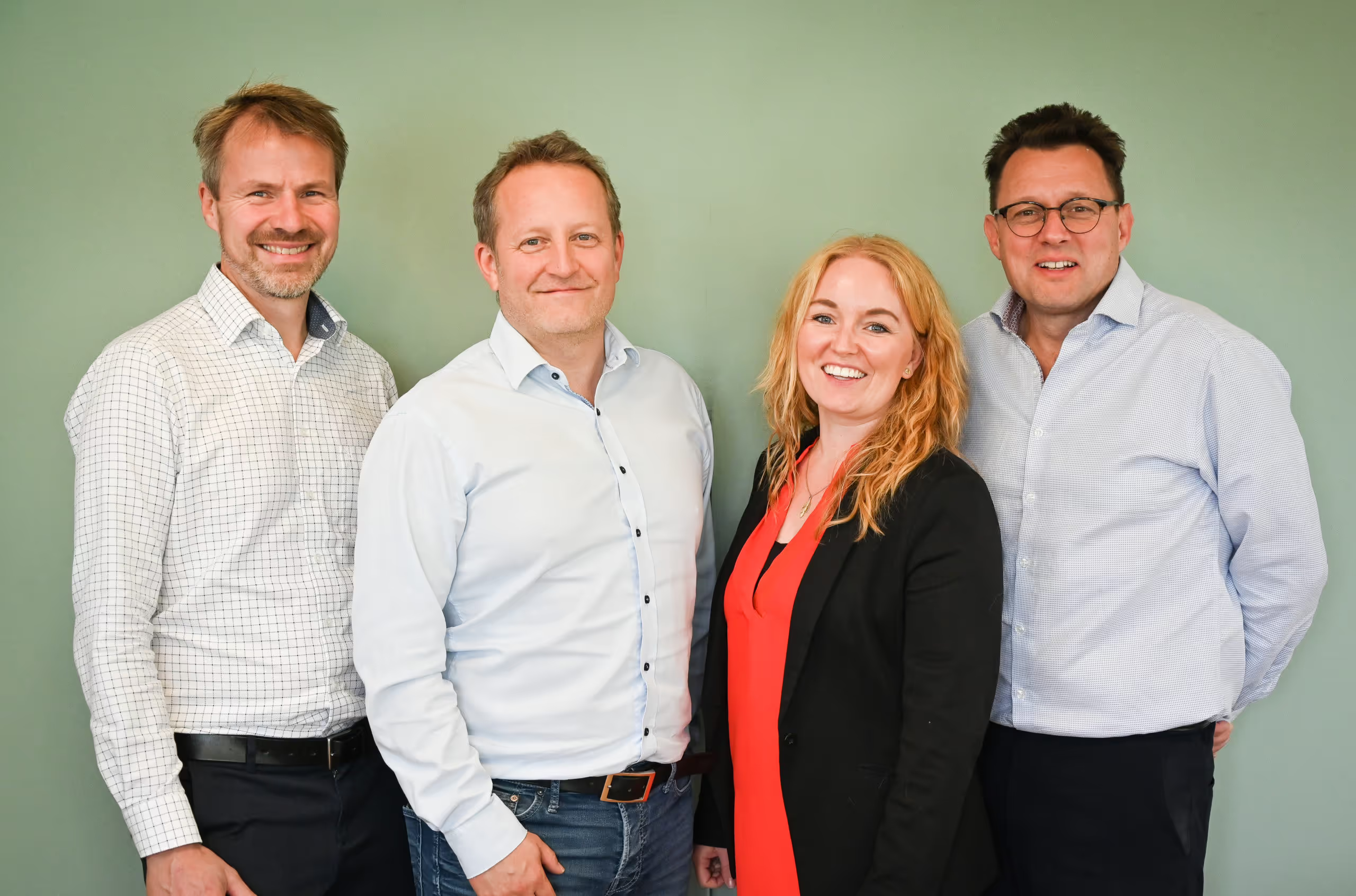
Specifically, there is uncertainty regarding AI, AI agents, and their implications for the traditional B2B SaaS model. So, we gave our view on the matter in Shifter today.
Public SaaS multiples have declined significantly. Looking at the Bessemer Venture Partners EV/Revenue LTM multiple, it dropped from an average of 5.6x over the last six months to a median of 3.7x last week. This 40 percent compression in valuation multiples highlights just how quickly sentiment shifted across core segments.

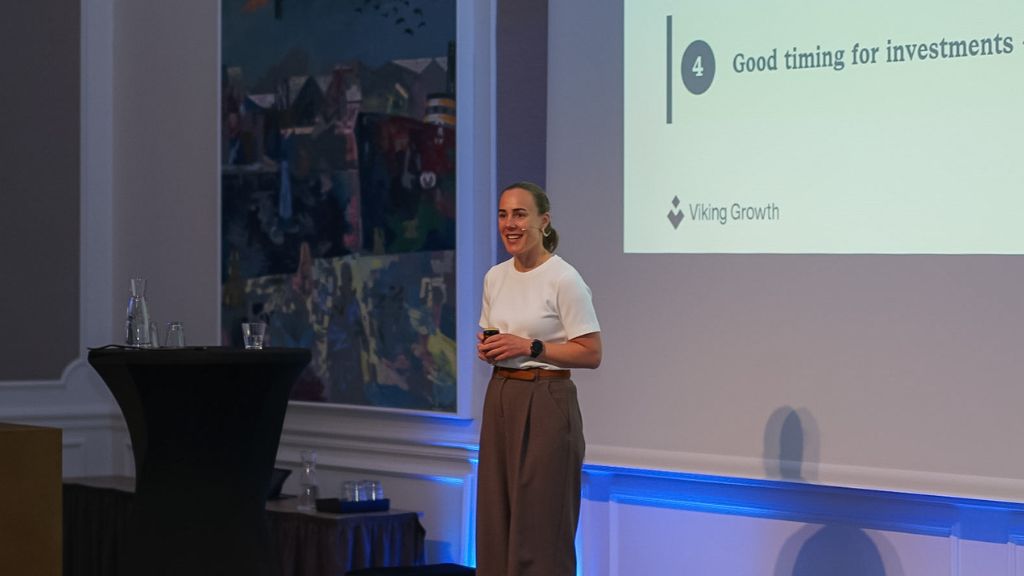
Martin Sjøhaug Eriksen, Investment Director at Viking Growth
If we shift our focus to the Nordics, the Viking Growth Nordic SaaS Index showed a median EV/Revenue LTM multiple of 3.1x, indicating minimal arbitrage between the US and Nordics. By country, Norway's listed B2B SaaS companies had the lowest median at 2.7x, Sweden at 2.9x, and Finland at 3.2x.
However, underlying company performance remains strong. Growth, margins, and operational metrics are solid across many high-quality businesses.
So, what changed? Market sentiment.
When uncertainty increases, public investors reduce risk exposure. This sell-off resets pricing expectations throughout the ecosystem. A similar dynamic occurred post-COVID, with sellers holding to previous peak multiples while buyers adjusted to new market realities. Activity slowed until expectations aligned.
We are likely experiencing a similar adjustment phase now.
The market’s concern is not current performance, but future relevance.
The fear is that:
In other words, value creation shifts from software applications to intelligence layers. It is still unclear whether this scenario will materialize at scale. Nevertheless, when markets perceive structural risk, valuation multiples adjust accordingly.
AI should be viewed as a tool, not a standalone product. Companies that treat AI as a simple feature risk commoditization. Those who leverage AI to enhance core problem-solving skills will strengthen their defensibility. Established B2B SaaS companies are not starting from zero:
This provides a structural advantage over AI-native startups that lack established distribution and integration.
The decline in multiples is not due to a collapse in specific KPIs, but rather to perceived future risk. However, certain metrics will become more important going forward:
1. Retention (Net Revenue Retention (NRR) and churn)
If customers remain, expand, and increase their share of wallet in an AI-driven environment, this is the strongest indicator of product relevance.
2. Expansion and upsell
Effective AI integration should drive increased expansion, not decline.
3. Pricing power and business model resilience
Seat-based pricing may face challenges. Companies adopting outcome-based, transaction-based, or hybrid pricing models will likely be viewed more favourably.
4. AI strategy clarity
We already see signs that AI is becoming a larger and dedicated area of due diligence. Buyers will seek assurance regarding the product roadmap, data ownership, GDPR/privacy, and internal AI capabilities. Unclear responses can therefore negatively impact valuation.
Moats are back, and they matter. In a volatile market, defensibility isn’t optional. Companies embedded in mission-critical workflows, owning direct datacapture, and operating in compliance-heavy environments will hold up. Those built on non-essential workflows or pure content generation won’t.
Market multiples may be out of your control, but performance is not. In periods of volatility, the companies that hold up best are those that execute with discipline. That means continuing to acquire new customers, protecting margins, driving profitable growth, and consistently strengthening retention.
At the same time, this is not a moment for incrementalism. AI adoption needs to be a leadership priority, not a side project. Internal capabilities must be upgraded, pricing models revisited, and your competitive moat clearly defined and actively reinforced.
The gap between companies that act decisively and those that hesitate is already widening. Organizations that delay will fall behind, while those that systematically integrate AI into their workflows will build durable advantages.
The fundamentals of valuation have not changed. Companies that combine high growth, strong profitability, and clear long-term potential will continue to stand out. But the bar is rising.
Premium valuations will increasingly go to businesses that can demonstrate that AI is a structural strength, not a source of risk. This means building business models that are adapted to the new environment, not exposed to it, and proving that customer relationships remain durable even as the AI landscape evolves. Retention, in this context, becomes more than a metric, it becomes evidence of relevance.
We continue to believe strongly in B2B SaaS that supports critical business processes. Markets are adjusting for uncertainty, not eliminating value.
The winners will not be those who talk most about AI. They will be those who leverage AI to deepen customer value, enhance defensibility, and improve economics.
Everything else is noise.

“SaaS isn’t dying — it’s being restructured.” Read the full article in Shifter [In Norwegian]
Read the full article
Kongens gate 8, 7011 Trondheim
© Viking Growth 2025



.jpg)



.png)