

Pricing is often the most underutilized growth lever in SaaS, yet in our portfolio, it contributed 38% of ARR growth from existing customers between 2022 and 2024.
Despite this, many B2B software companies still rely on legacy approaches: historical assumptions, competitor benchmarks, or cost-plus logic. These methods consistently underprice the product relative to the value it delivers.
Value-based pricing fixes this by tying price directly to customer outcomes. Done well, it improves acquisition, expansion, and retention.
AI makes this shift urgent. When software begins to replace work, not just support it, pricing must reflect outcomes, not inputs. (We unpack this further in pricing AI value.)

Most software companies fall into one of three models:
The first two systematically leave revenue on the table. (If you're earlier in your pricing journey, our guide to how to price your SaaS product covers the foundations before layering value-based logic on top.)
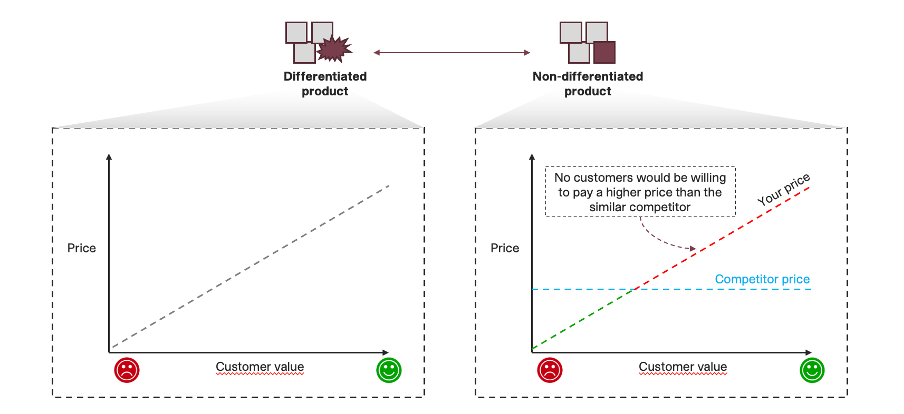
If your product is differentiated, competitor pricing should not define your ceiling. A company with €10M ARR and a 10% margin that increases prices by 20% can triple EBITDA from €1M to €3M, without adding a single customer. Few growth initiatives deliver that kind of impact with such limited effort.
If your pricing metric doesn’t scale with customer success, you’re capping your own growth.
There is no true average customer. Pricing based on averages typically overcharges smaller customers and underprices your most valuable accounts.
Segment your customer base by company size, industry, tenure, usage intensity, and other relevant factors. Identify groups that realize varying levels of value. For example, a start-up and a large enterprise may use the same product, but the economic impact differs significantly, and pricing should reflect this.
Segmentation reveals pricing gaps. Long-term customers are frequently underpriced on a per-user, per-month basis. This gap becomes apparent when analyzing price relative to tenure and usage.
AI makes this especially important. A customer with 10 users automating 500 tasks per month derives far more value than one with 50 users barely using AI. In these cases, seat count no longer reflects impact.
This also shapes how you think about AI feature packaging. Where heavy AI users may warrant a different tier or add-on structure than users who primarily use your core product.
To price based on value, you first need to understand the value you deliver. It typically falls into three categories:
Start with internal hypotheses and validate them through customer conversations. Focus on the correct order of magnitude rather than precise figures.
Example: A document management system that enables 40% faster retrieval, improved compliance, and the removal of legacy systems can be worth more than 22,000 DKK per user per year in a 500-employee organization. This should anchor the pricing discussion.
AI features often create value in ways that are more direct and measurable than traditional software. E.g., hours saved, tasks completed autonomously, error rates reduced. This makes value quantification both more important and more tractable.
AI makes value easier to quantify:
Key metrics to assess:
AI doesn’t just enhance software, it makes value more measurable, and therefore more monetizable.
Once you understand the value delivered, identify the variable that drives it. The right pricing metric determines if your model supports or limits growth.
Many companies default to user count, but this is often a poor indicator of value and may even be negatively correlated with it. As customers optimize processes, they may need fewer users while gaining greater value.
Better metrics typically fall into three categories:
Pricing based on output or business outcomes typically aligns best with customer value and encourages account expansion.
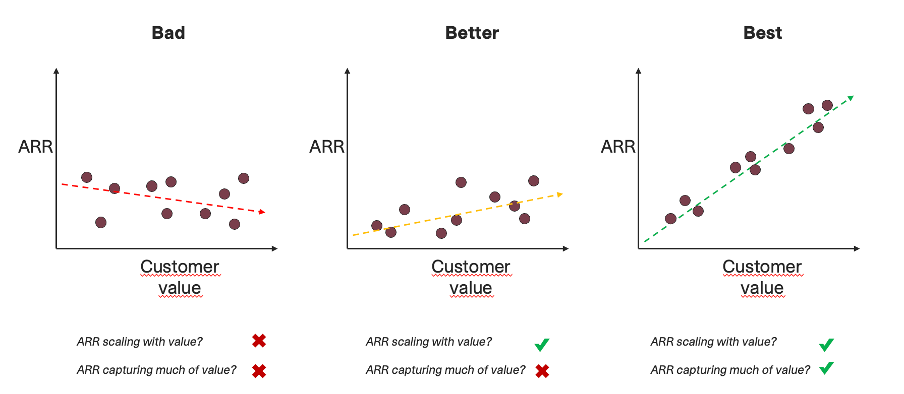
When AI automates work, the traditional user-seat metric becomes actively misleading. An AI agent completing 500 support cases per month creates the same value regardless of whether one or ten people administer it. Seat count does not scale with this value, but task count or outcome count does.
Common AI-specific metrics that scale well with value:
Switching costs influence your pricing power. Before adjusting prices, assess how challenging it is for customers to change providers.
Estimate the total time needed to change providers, both internally and externally. A typical mid-market customer may require over 80 internal hours and 40 external hours. At rates of 100 to 120 euros per hour, this results in switching costs of 12,000 to 45,000 euros.
This provides substantial opportunity for price increases and highlights where competitors’ customers may be vulnerable to switching.
Differentiation is essential for pricing power. If a competitor delivers similar value at a lower price, it limits what you can charge.
Map the real alternatives available to customers: staying with you, switching to a competitor, or combining multiple tools. Use this, along with a switching cost analysis, to estimate your pricing potential.
In practice, companies often have more pricing flexibility than they realize. Frequently, their highest published price is still below competitors’ lowest, indicating structural underpricing.

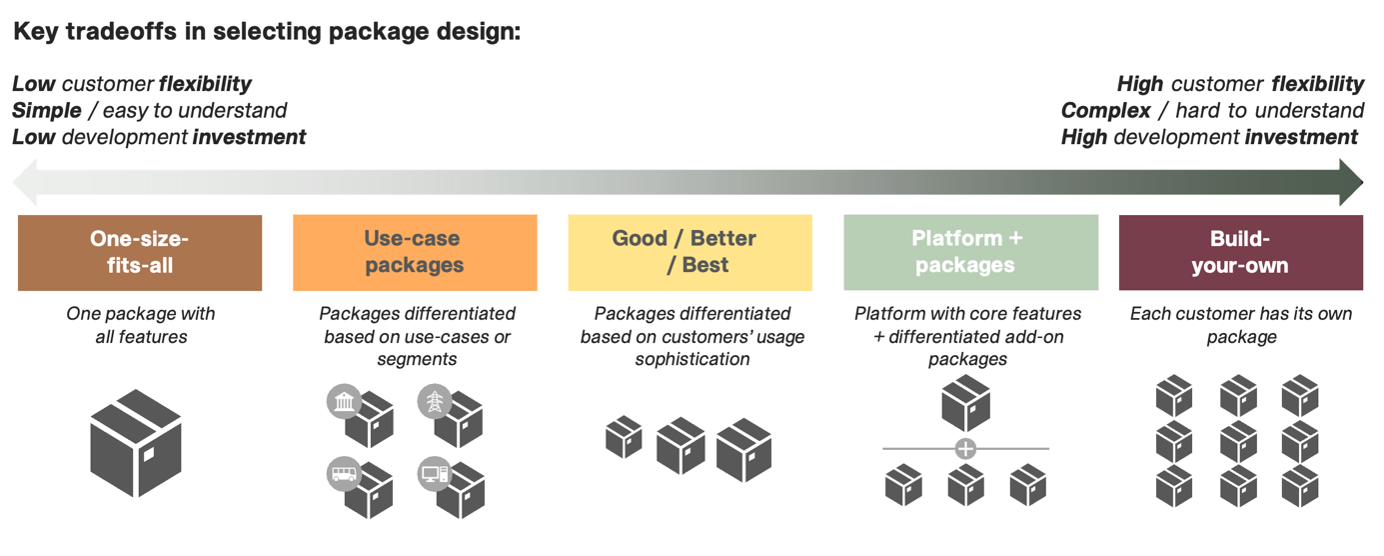
With the analysis in place, design your pricing model. This includes defining:
Packaging should reflect what customers value most. Place features that drive purchase decisions in core tiers. Price high-value features for smaller segments separately, and deprioritize low-value features.
A strong pricing model enables gradual expansion, allowing customers to start at an entry point and scale over time. Once the pricing model is set, the next lever is billing cadence: moving from monthly to annual invoicing improves liquidity without touching price.
A new pricing model initiates a continuous learning cycle. Track both quantitative and qualitative indicators:
Establish a clear reporting structure and review it monthly. (For the wider measurement framework — including the metrics that should sit alongside pricing-specific ones — see the top SaaS KPIs to track in 2026.)
Pricing is an ongoing discipline, not a one-time project. Markets evolve, competitors adapt, and customer willingness to pay shifts over time.
Assign clear internal ownership of pricing. Conduct structured tests and validate assumptions before broad implementation. Review your pricing model at least once a year.
The best pricing models are never finished. They improve continuously, just as strong products do.
If you are unsure where to start, these three exercises provide immediate insight:
These analyses can be completed within one week and will clearly highlight the greatest opportunities.
Want a structured workbook to run them in your team? Download the SaaS Pricing Playbook.


Kongens gate 8, 7011 Trondheim
© Viking Growth 2025