
Growth is rarely about the product alone
13 August 2026

13 August 2026
When growth slows, many companies’ first instinct is to try to improve their product. For Xait, however, the greatest potential for growth was in strategy and organizational development.
Looking at Xait’s development over the past few years, it would be easy to point to the product as the primary driver of growth. The company had already established a strong market position with software that solved critical workflows and handled complex proposal and tender processes.
When Eirik Gudmundsen took over as CEO, the main question wasn’t how to improve the product. Instead, the challenge was to build an organization that could unlock the product's full potential and enable the company's next phase of growth.
“The product was already strong. The question was how we could organize the company to capitalize on the opportunities that were already there,” says Gudmundsen.
Over the following years, the company grew fivefold. Today, Xait’s solutions are used by more than 300 customers globally across industries, including energy, engineering services, and construction. We had a conversation with Eirik Gudmundsen to learn how they achieved this growth.

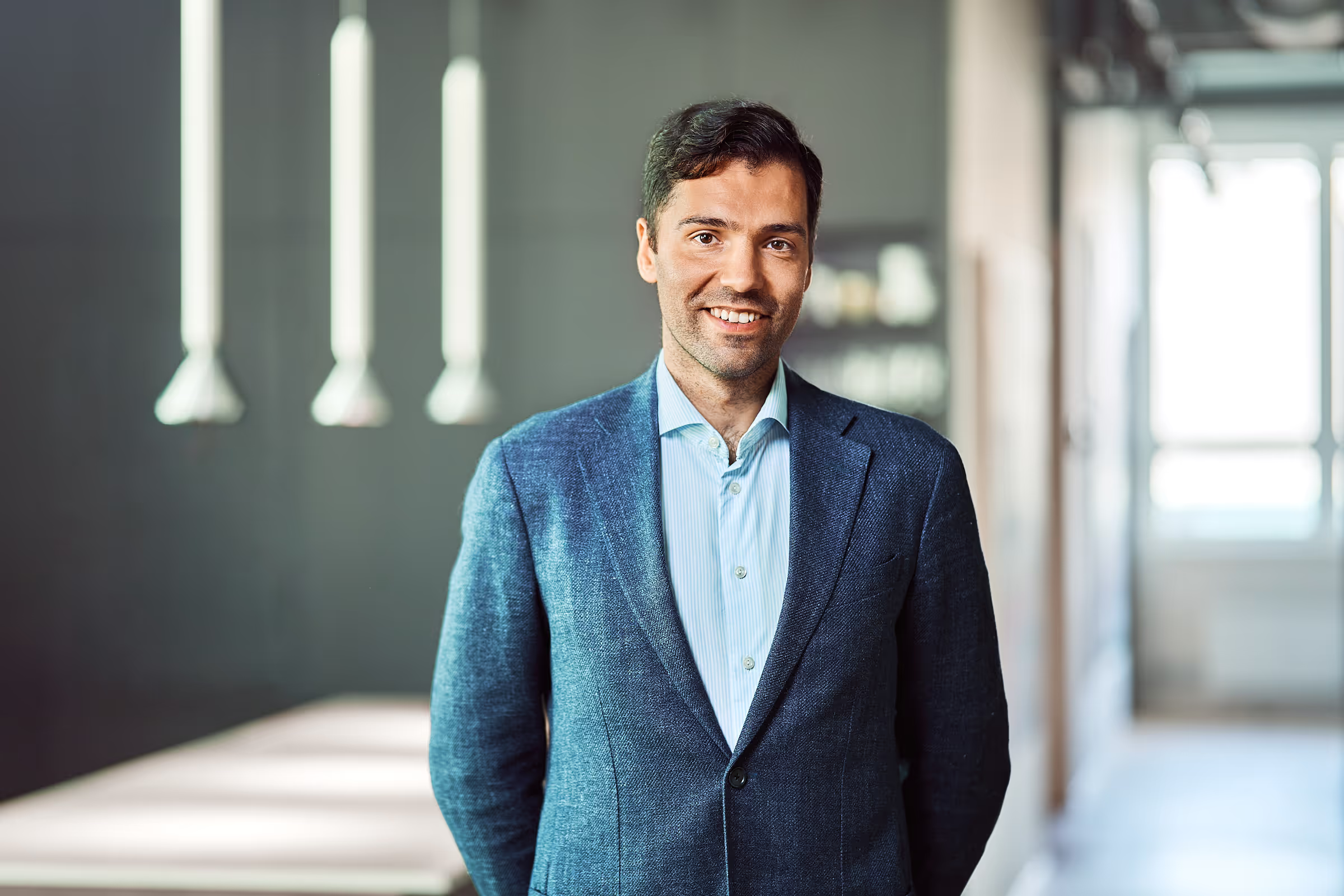
Eirik Gudmundsen, CEO at Xait
When companies succeed in developing their products, they often face a new challenge: more opportunities make it harder to choose what to focus on. Xait faced the same challenge. Its technology could be applied across multiple industries and use cases, but resources were limited.
One important decision was therefore to clarify where the company should focus its efforts. For Xait, this meant targeting sales enablement and proposal management, areas where the company already had strong reference customers and a clear market position.
“The most important thing wasn’t necessarily what we chose to focus on, but that we made a deliberate choice to focus.”
This strategic focus also drove internal improvements. Clearer priorities made it easier to align the organization around shared goals and a common direction.
According to Gudmundsen, the company he took over was characterized by organizational silos, which had naturally and slowly developed over time. Teams worked toward different objectives, communication was limited, and responsibilities were not always clearly defined. This can can easily happen to any organization when it transitions from startup to scale-up.
As a result, the company's first few years were largely devoted to strengthening its organizational foundations. The company established clearer roles, improved information flows, and created a shared understanding of strategy and direction.
One concrete example was the creation of a dedicated Customer Success function. Previously, responsibility for customer development was spread across multiple roles. By clearly separating new customer acquisition from existing customer management, the company strengthened its focus on both.
The result was stronger customer growth, higher net retention, and increased capacity to win new business.
During Viking Growth’s ownership period, Xait completed three acquisitions. According to Gudmundsen, these acquisitions were a natural outcome of the company's greater focus on its strategy.
Once the target customer group and value proposition were clearly defined, it became easier to identify technologies that could strengthen the platform and create greater value for customers.
Not all investments developed as expected. Some generated significant value, while others primarily provided valuable lessons. The most important insights were related to implementation and onboarding.
Xait discovered that implementation processes for certain products were more complex than anticipated. When parts of the implementation work were outsourced to external partners, the company lost control over key elements of the customer experience.
“We learned that onboarding is a far more important part of the value chain than we initially thought,” Gudmundsen explains.
This experience led to the establishment of a dedicated organization responsible for implementation, support, and customer success across the product portfolio.
Xait began investing in AI as early as 2019, well before today’s wave of generative AI. However, Gudmundsen believes discussions around AI often become too technology-driven.
Several customers ask for AI functionality because they see it as an essential capability. At the same time, it is not always clear which problem the technology is intended to solve.
For Xait, the goal has therefore been to integrate AI into existing workflows rather than treating it as a standalone product initiative.
“The most important thing is still solving the customer’s problem. AI is a tool, not an objective in itself,” he says.
Internally, the company is already experiencing productivity gains. Several planned hires within the development organization have not yet been necessary because AI tools have increased the capacity of existing teams.
Looking back, Gudmundsen does not point to a single defining decision. Instead, he highlights the ability to make continuous adjustments as the company grows.
Processes that work in an organization of 20 employees may not work when the company doubles in size. The same applies to organizational structure, leadership practices, and go-to-market strategies.
“It’s easy to think you’ve tried something before. But if the company has grown significantly since then, it’s really an entirely new situation,” says Gudmundsen.
For Xait, growth has resulted from consistent execution over time rather than a single transformative event. Throughout the company's development, focus, structure, organizational maturity, and adaptability have been key success factors.
These lessons resonate across many software companies that successfully transition from a strong product to a scalable business.

Kongens gate 8, 7011 Trondheim
© Viking Growth 2025


.avif)

