

Product positioning defines how your product is perceived relative to competitors and what unique value it delivers to your target audience.
In B2B software, teams often focus on building the product, adding features and expanding the roadmap. Yet, one of the most important decisions comes earlier: defining what the product actually is. That decision is positioning.
Positioning is often seen as a marketing task, but it shapes decisions across the entire organization from, sales and marketing to product and customer success.

Knut Anders Thorset, Director of Product Marketing at Liquid Barcodes
The management team in one of our portfolio companies, Liquid Barcodes, has done a lot of work to get their positioning right, from talking about everything their software can do to focusing solely on what’s unique with their platform.
In a recent community session, Knut Anders Thorset, Director of Product Marketing at Liquid Barcodes, explained how the team built their positioning using a framework from positioning expert April Dunford, and how they applied it in practice.
For B2B SaaS companies trying to scale, getting positioning right can simplify growth. To see this impact, consider the following analogy from Knut Anders.
Knut Anders uses a simple analogy to explain how positioning shapes an entire business.
Imagine you start out building a premium cake. Immediately, you inherit a certain business model:
After experimenting, the product evolves. The cake becomes smaller, portable, and single-serving. The ingredients didn’t really change, but suddenly you’re not selling cake anymore. You are now selling muffins.
Not much has changed in the product itself. It's the same ingredients, same batter, almost the same taste. But almost everything else about the business has changed.
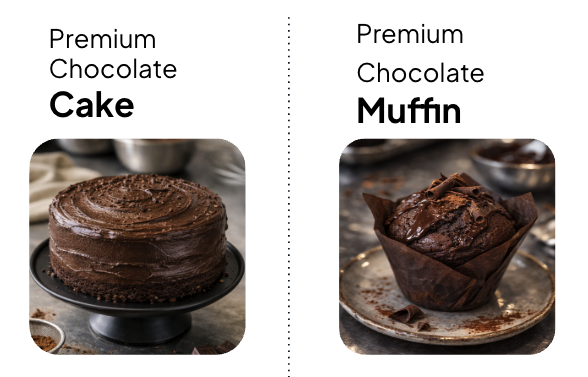
Now:
A minor change in the product results in a fundamentally different company.
This example shows how positioning choices determine your business direction and success. Therefore, you must deliberately define your company's identity.
“Simply by deciding that you’re making a cake, you’ve already made a lot of decisions about your business, who your customers are, where you sell it, who your competitors are, and even what improvements belong on your roadmap.”
The difference between cake and muffin positioning is clear in the food industry. The same dynamic exists in SaaS, but most companies don’t notice it.
Buyers face an overwhelming choice. In many categories, thousands of tools compete for attention. Most SaaS companies respond by presenting an extensive list of features.
“Here’s everything we can do. 250 different features.”
But buyers don’t want a feature list. They want to know one thing:
Why should we choose you instead of the other vendor?
“When someone sits down for a sales call, they don’t want to hear everything you can do. What they’re really wondering is, what’s different about you compared to the other guy presenting on Thursday?”
Good positioning shifts the conversation from everything you do to what only you can offer.
Knut Anders references the framework popularized by positioning expert April Dunford, who defines product positioning as:
“The act of deliberately defining how you are the best at something that a defined market cares a lot about.”
For SaaS companies, effective positioning answers four essential questions:
If a company cannot answer these questions clearly, its positioning is likely unclear. Clear positioning ensures marketing aligns, messaging is strong, and growth accelerates. Clarity leads to better results. So, how can you get to this clarity?
A common mistake is attempting to position a product for all potential customers. Instead, begin positioning with customers who are already the best fit.
“You should define your positioning around the customers that are actually a great fit, not customers who use your product but need workarounds.”
Strong positioning leverages areas where your product already excels. Optimizing for customers who are not a good fit only weakens your messaging.
Another common pitfall is defining competitors too narrowly. Many SaaS teams consider only other software vendors as competitors. However, the essential question is simpler:
If your product didn’t exist, what would customers do instead?
The answer might be:
Understanding these alternatives clarifies how buyers perceive and approach the problem.
Once the competitive landscape is understood, the next step is to identify genuine differentiation. This involves narrowing a large set of features to those that are truly unique.
At Liquid Barcodes, the team started with more than 150 features. After analysis, they identified just six areas where the product was clearly differentiated.
“Positioning is about moving from talking about everything you can do to focusing on the few things only you can do.”
Emphasizing your unique strengths ensures your business stands out and attracts the right customers.
Features alone are insufficient. They must connect to key customer outcomes.
“Value exists on a spectrum, from a specific feature on one end to pure business results such as revenue or profit on the other.”
If messaging focuses solely on features, customers may not recognize the benefits. On the other hand, messaging that focuses only on high-level outcomes, such as “increase revenue,” becomes generic.
Therefore, the objective is to position value in a way that is both clear and differentiated.
At Liquid Barcodes, several unique features ultimately rolled up into two core value themes:
These core themes make your positioning memorable and demonstrate that you deliver tangible business value.
The final step is to select the category in which your product competes. This decision significantly influences how buyers perceive your product. Knut Anders gives a simple example:
If someone describes a product as “cake on a stick,” it sounds odd, but if you call the same product a cake pop, the expectations immediately shift.
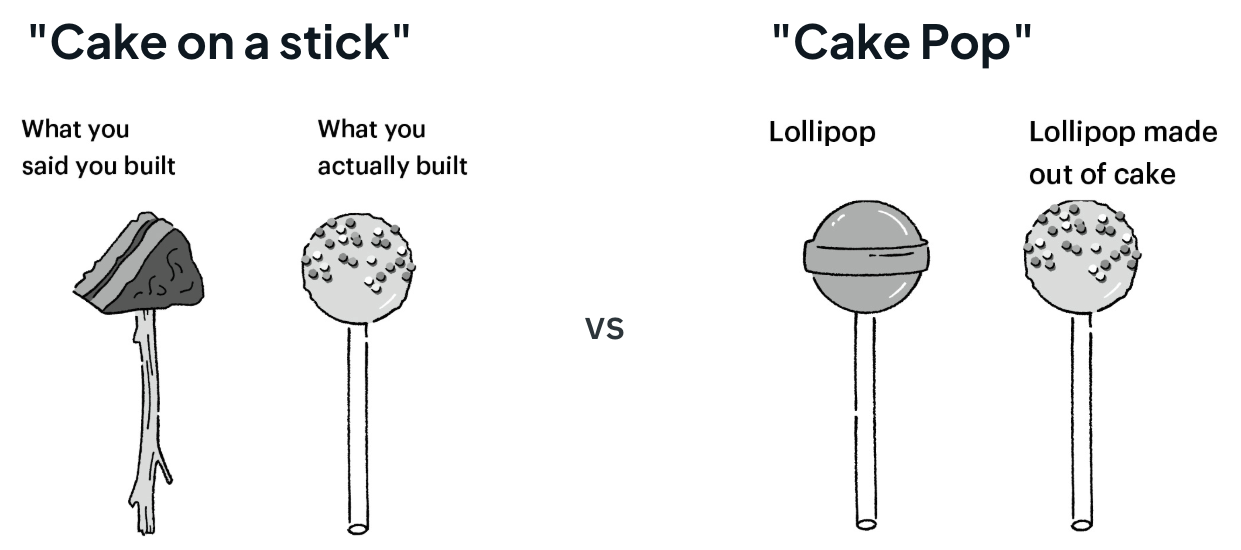
“Simply changing what you call the product can completely change how people understand what it should be.”
The same principle applies in B2B SaaS. Naming and positioning your product within the appropriate category can accelerate buyer understanding and facilitate faster decision-making.
A common misconception is that positioning is solely a marketing activity. When executed effectively, positioning influences nearly every function within a company:
At Liquid Barcodes, the positioning process led to significant updates throughout the business. The team rebuilt:
“Once you decide on positioning, everything should reinforce those few value themes.”
Even if the product remains unchanged, positioning may become ineffective. Markets evolve and buyer perceptions shift.
A product once marketed as a diet muffin might later succeed as a gluten-free paleo snack, even if the recipe never changed.
“Sometimes the same product needs a new positioning because the market has changed.”
For SaaS companies, this often happens as categories mature and new competitors appear. Positioning should not be viewed as a one-time exercise. Treat positioning as an ongoing strength by consistently assessing and adapting it to maintain a competitive edge in dynamic markets.
Early-stage startups often achieve growth through speed and experimentation. As companies scale, clarity becomes a significant competitive advantage.
Clear positioning helps:
Most importantly, it answers the question every buyer is asking:
Why you?
Because in crowded SaaS markets, the companies that win are rarely the ones with the most features. Long-term winners are easy to understand and difficult to confuse with competitors.
Ensure your value is unmistakable.

Kongens gate 8, 7011 Trondheim
© Viking Growth 2025


.avif)
%2C%20Christine%20Hammeren.jpg)

